Guides & Protocols
Sacred Spaces is where you begin — one room, one season, one honest next step.
The bedroom you sleep in, the kitchen you feed your family from, the season of life you are actually in right now.
Not everything at once, but one space at a time, met wherever you already are.
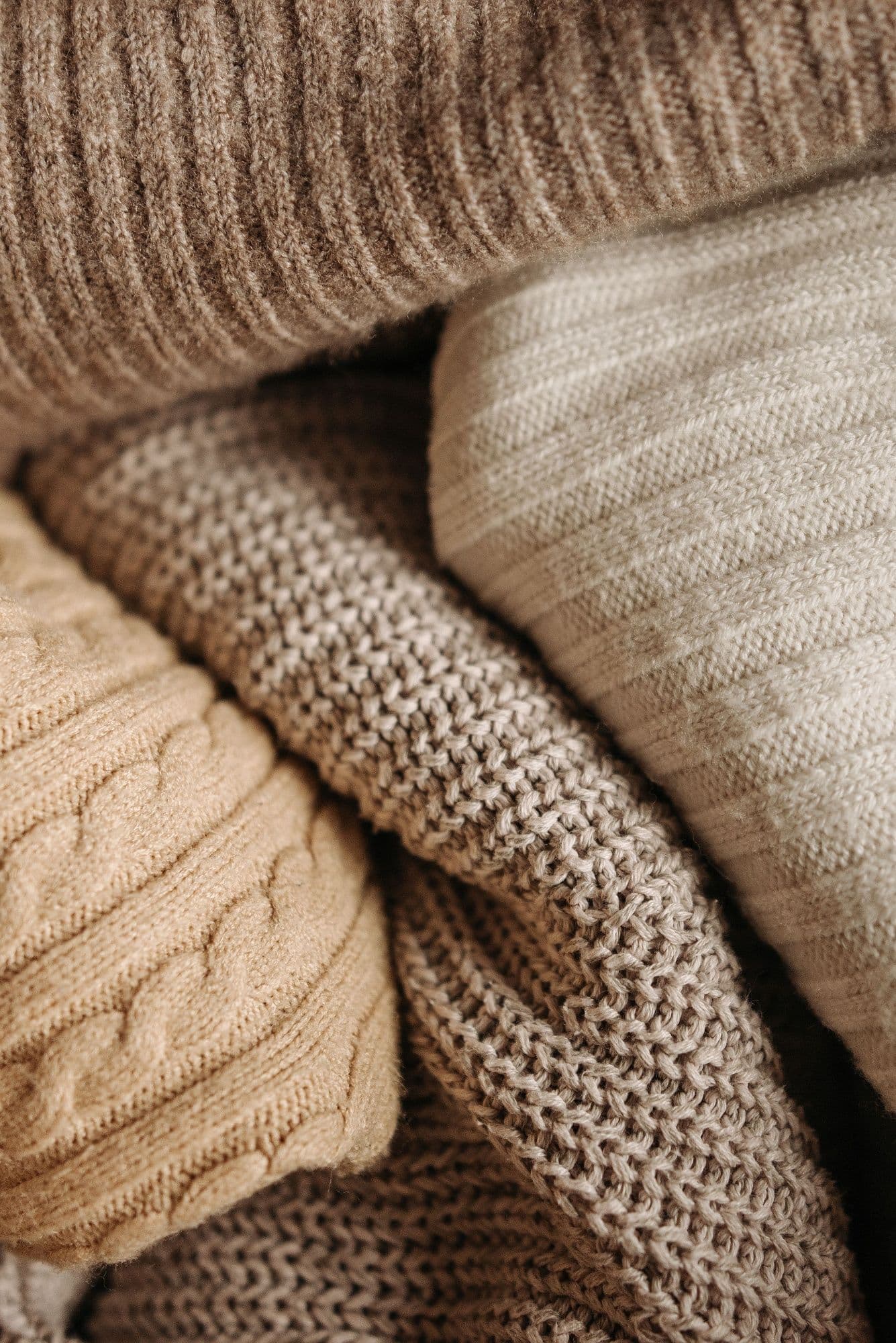
The Fabric guide
Your skin is your largest organ, and fabric is what touches it most. All day. All night. Every layer you pull on is a choice about what you invite to rest against your body. What rests closest to your body matters most. Most of us were never taught to read a garment the way we read a label on our food. We learned to shop for color, for fit, for price. The fiber tag largely ignored. Yet what a fabric is made of, how it was grown or spun, and the hands that touched it all leave a trace. This guide is our answer to that gap. We traced fabrics from the source to the rack and rated them the way we rate everything at SacredLee: by what they are made of, how they are made, how long they last, and who made them. Nearly 80% of garment workers worldwide are women. No woman stands alone. How we treat her, and the land she harvests and weaves, reflects how we treat the great mother herself. Inside, you will find fabrics sorted into four tiers: The Best — natural fibers that give back more than they take, like organic cotton, linen, and hemp The Mid — semi-synthetics that earn a closer look, like Tencel and modal The Worst — petroleum-based fabrics that shed microplastics into your skin and your water The Future — the emerging fibers we are watching with hope We are not asking you to throw open your closet and start over. This is subtle subtraction, not panic. Keep what serves you, release what does not belong, and you choose with intention as things wear out.
View guide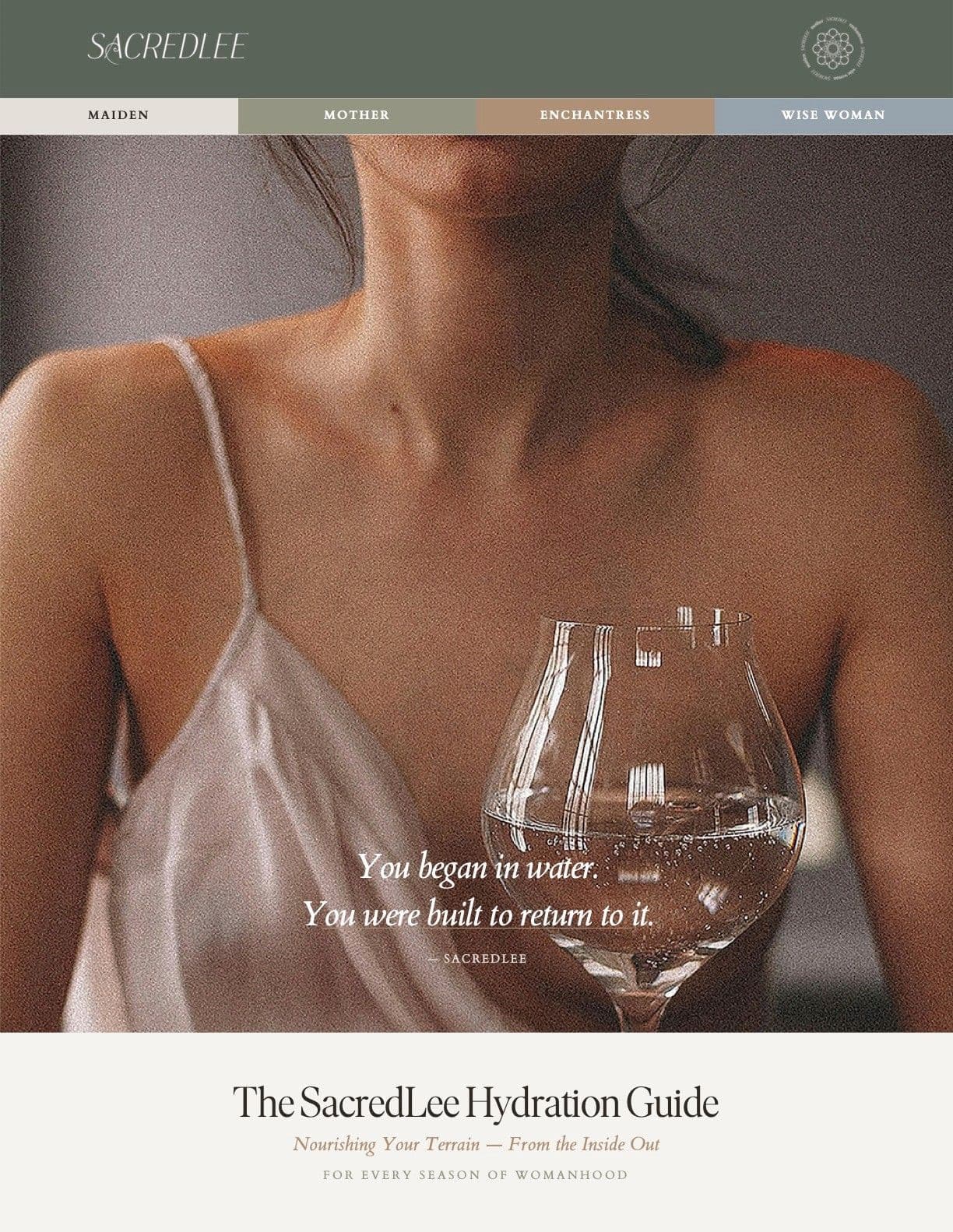
SacredLee Hydration Guide
You were not born thirsty. You were born saturated. Every human life begins in water. You floated in your mother's waters, weightless and perfectly nourished, nearly 78% water at birth. A healthy adult carries somewhere between 55 and 65%. With each passing decade that number quietly falls, and we call it aging. Often it is something simpler. Coffee before water. Wine before rest. Heated homes, air-conditioned offices, hard workouts without replenishment. Ayurveda has a word for it: ruksha, dryness. Not only in the body, but in the life. Here is what almost no one tells you. You can drink your eight glasses and still be functionally dry. Plain water, without minerals, can dilute the electrolytes you have left. Water does not become nourishment simply by being swallowed. It has to reach the inside of the cell. That is the question this guide answers, and the most important part of it is not how much. It is how. Inside, we walk you through the terrain most of us were never taught to read: The cellular truth, why minerals, not volume, decide whether water nourishes you Your three minerals: sodium, potassium, and magnesium, and where the gap lives (97% of women run chronically low in potassium) A daily reference. Water and mineral baselines for every season of womanhood, Maiden through Wise Woman Food first — the highest-potassium and highest-magnesium foods, then the few products we trust The daily ritual, when to drink, when to wait. This is about giving your body water it can actually use. The body is a living terrain that either welcomes or refuses it.
View guide